CBD Vape Hardware Quality Control: 7 Checks Before Production
A product sample can look right and still leave important questions unanswered. Does the production version use the same materials? Will the cartridge fit the selected battery? Do the test reports cover the exact model being supplied?
CBD vape hardware quality control starts with documented specifications and continues through compatibility testing, production inspection, and batch traceability. A polished housing or a long feature list cannot answer these questions on its own.
For brands and product teams, the following seven checks provide a practical framework for evaluating hardware before approving production.
1. Turn the Product Listing Into an Approved Specification
A product page helps identify a possible hardware platform. An approved specification defines what the manufacturer is expected to deliver.
Record the model number, version, dimensions, reservoir capacity, materials, heating element, electrical resistance, activation method, and charging requirements. Where a specification allows variation, document the permitted tolerance.
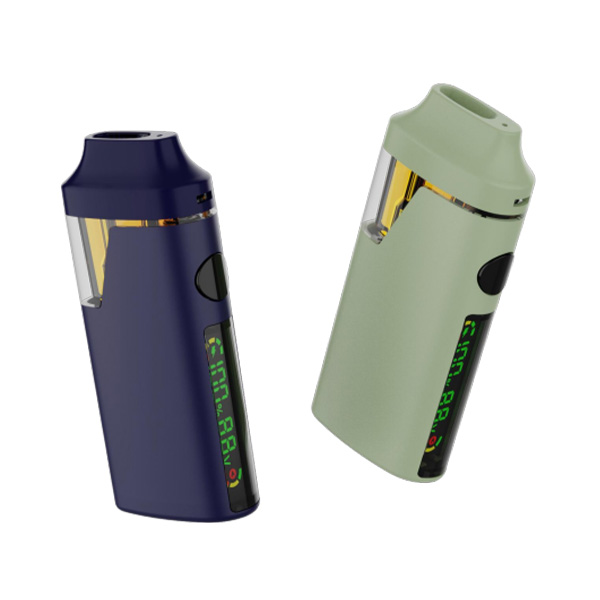
For example, the published DANK SMOKE DK026 specifications list 2 mL and 3 mL tank options, a 320 mAh battery, a ceramic coil, Type-C charging, and a battery and voltage display.
These details establish a starting point for verification. They do not, by themselves, demonstrate compatibility with a particular formulation or compliance in a destination market.
Before approving samples, confirm the exact configuration. A model offered in multiple versions should not be treated as one interchangeable product.
2. Review Materials Across the Complete Contact Path
A material label such as “ceramic” or “glass” describes only part of a device.
Ask for material information covering the reservoir, seals, mouthpiece, heating assembly, and other components that contact the formulation or aerosol. Include any relevant coatings and adhesives.
A useful review should establish:
- Which materials are used in each component.
- Whether those materials match the approved sample.
- What compatibility evidence is available.
- How material substitutions are controlled.
Material suitability needs to be evaluated for the intended application. A general material description or a “food-grade” claim should not be treated as proof of inhalation safety.
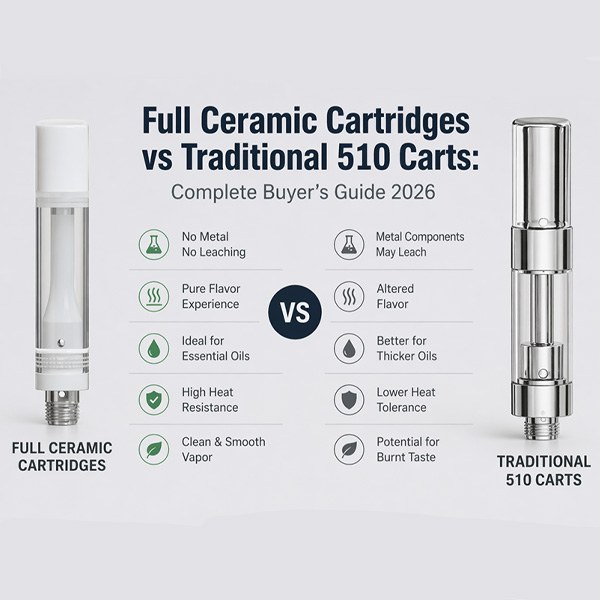
For background on one common heating-element category, see the ceramic coil cartridge guide. The heating element should still be assessed as part of the complete assembly.
3. Define Leakage and Storage Checks Before Testing
“Leak-resistant” is difficult to evaluate unless the supplier explains how the claim was assessed.
Agree on a written test plan that identifies the sample configuration, formulation, storage orientation, environmental conditions, observation period, and acceptance criteria. Tests should represent the intended storage and distribution conditions and remain within a professionally defined protocol.
Separate observations rather than recording every issue as “leaking.” Liquid outside the reservoir, mouthpiece condensation, a damaged seal, and residue around a connection may require different investigations.
Keep photographs, sample identifiers, and inspection records. If a sample fails, document the suspected cause, corrective action, and retest results.
An unspecified statement that a device “passed a leak test” is less useful than a report showing what was tested and under which conditions.
4. Check Battery and Cartridge Compatibility as a System
A matching connector does not establish complete compatibility.
For cartridge systems, verify mechanical fit, electrical contact, supported resistance, output behavior, and airflow alignment. For integrated devices, review the battery, control circuit, and heating assembly together.
The evaluation should answer practical questions: Does the connection remain stable? Does activation behave consistently? Are the documented operating limits appropriate for the selected assembly?
DANK SMOKE’s 510 thread battery guide introduces the relationship between battery capacity, voltage options, and cartridge selection. During quality review, those specifications should become measurable acceptance requirements.
Do not assume that a higher capacity, more settings, or additional display features automatically indicate better quality. Each feature adds something that must be verified.
5. Separate Electrical Safety Evidence From General Performance Claims
A device that activates and charges during a demonstration has not necessarily undergone a complete electrical safety assessment.
Ask what testing supports the battery, charging circuit, protective functions, and interconnected components. Confirm that reports identify the relevant model and configuration.
UL Solutions’ explanation of UL 8139 describes evaluation of the electrical, heating, battery, and charging systems of vaping devices. It also explains that the standard does not evaluate consumables or their physiological effects.
This distinction matters: electrical safety evaluation is not the same as assessing aerosol composition or health effects.
Referencing a standard does not mean that a particular product is certified to it. Any certification claim should be checked against the applicable documentation and product identity. Electrical abuse testing belongs in an appropriately equipped professional facility.
6. Make Test Reports Traceable and Relevant
A report is most useful when it can be linked to the hardware being approved.
Review the model identifier, sample description, test method, conditions, results, report date, and issuing laboratory. Establish whether the tested samples represent the current materials and design.
Where accredited testing is needed, confirm that the laboratory’s accreditation scope covers the relevant method. ISO/IEC 17025 specifies requirements for the competence, impartiality, and consistent operation of testing and calibration laboratories.
Laboratory accreditation is not a blanket approval of every product tested there.
Keep hardware inspection, electrical testing, formulation testing, and aerosol testing distinct in the documentation. These evaluations answer different questions; one should not be presented as a substitute for all the others.
7. Carry Sample Requirements Into Production
Sample approval should create a reference for production, not end the quality review.
Retain an approved reference sample together with its specification revision. Agree on defect definitions, inspection methods, sampling arrangements, and the process for handling nonconforming units.
Production records should make it possible to identify the batch and investigate relevant component or process changes. Establish which substitutions require approval and when additional testing is necessary.
A simple handover record can help:
| Review area | Evidence to retain |
|---|---|
| Product identity | Model, version, and approved specification |
| Materiales | Component material information and change records |
| Compatibility | Results for the evaluated hardware combination |
| Leakage and storage | Test conditions, observations, and acceptance criteria |
| Electrical assessment | Applicable reports and configuration details |
| Production inspection | Batch identifiers and inspection results |
| Corrective action | Defect investigation and retest records |
No single sampling plan suits every project. Inspection requirements should reflect the design, production process, defect severity, and applicable requirements.
Applying the Checklist to DANK SMOKE Hardware
El DANK SMOKE product catalog includes CBD device platforms, cartridges, batteries, and charging accessories.
Use the relevant model listing to begin a technical review, then request the current specification and supporting documentation for the exact configuration under consideration. Availability of a feature should be confirmed separately from evidence of its performance.
For a productive review, prepare the model number, destination market, intended configuration, required documents, and acceptance criteria. This gives both sides a clear basis for discussing what has been verified and what still requires evaluation.
Preguntas frecuentes
What should a vape hardware quality control checklist include?
It should cover product identity, specifications, materials, leakage and storage checks, electrical compatibility, relevant test evidence, and production traceability. Acceptance criteria should be defined before inspection begins.
Does a successful sample prove that an entire batch will perform the same way?
No. Samples provide evidence about the units evaluated. Production controls, change management, and batch inspection help determine whether later units remain consistent with the approved specification.
Does ceramic construction guarantee a safer device?
No. Ceramic describes a material or heating-element category. It does not establish the safety of the complete device, formulation, or aerosol.
Should hardware be evaluated again after a design change?
Changes to materials, seals, the heating assembly, battery, or control circuit may affect earlier conclusions. Review each change and determine which checks need to be repeated before approving the revised configuration.
A useful quality review ends with an identifiable product, documented evidence, clear acceptance criteria, and a process for managing changes. Those records make future production decisions easier to explain and verify.