Rechargeable vs Refillable Vapes: CBD Hardware Explained
A charging port tells you something about a vape device’s battery. It does not tell you whether its reservoir can be refilled.
The difference between rechargeable vs refillable vapes is straightforward: rechargeable describes restoring battery power, while refillable describes adding liquid to a reservoir designed for repeated filling. A device may support one function, both functions, or neither.
For CBD hardware documentation, keeping these terms separate helps readers understand what a device is designed to do—and what its specifications do not establish.
Rechargeable, Refillable, and Replaceable: Three Different Features
These terms describe different parts of a device:
| Term | What it describes | What it does not establish |
|---|---|---|
| Rechargeable | The battery can be charged according to the manufacturer’s instructions | The reservoir can be refilled |
| Refillable | The reservoir is designed for repeated filling | The battery or heating element can be replaced |
| Replaceable cartridge or pod | A compatible cartridge or pod can be exchanged | The cartridge or pod itself is refillable |
A reusable battery may work with sealed, replaceable cartridges. A device with an integrated reservoir may have a rechargeable battery but no user-refillable design.
The most useful product description identifies each function separately rather than relying on the word “reusable.”
What Does Rechargeable Mean for CBD Vape Hardware?
A rechargeable CBD vape device has a battery and charging system intended to accept power through a specified connection.
Recharging restores electrical energy. It does not replenish liquid, renew the heating element, or repair a damaged component.
A specification should identify the charging interface and the electrical input requirements. It should also explain charging indicators and any restrictions on charging or operation.
Battery capacity and reservoir capacity describe different things. A capacity stated in mAh relates to the battery; a reservoir capacity stated in mL relates to liquid volume. Neither measurement alone establishes how many charging sessions a complete device will support.
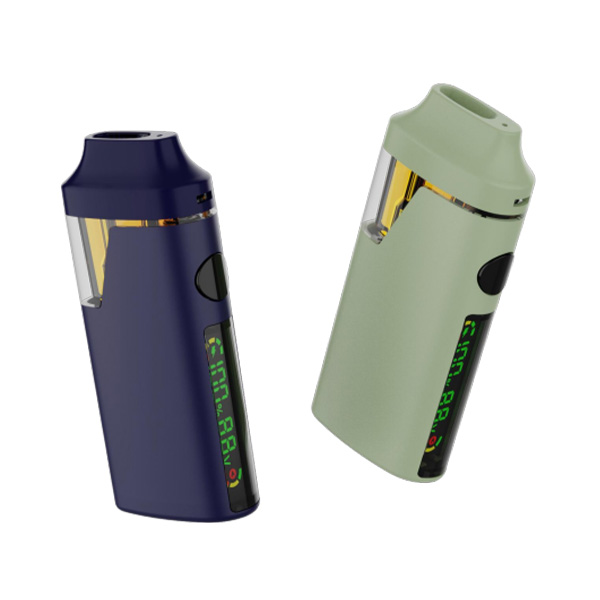
Example: DANK SMOKE DK026
The published DK026 hardware specifications list a 320 mAh battery, Type-C charging, 2 mL and 3 mL tank options, and a battery and voltage display.
These specifications describe charging and storage features. They do not, by themselves, establish that the reservoir is intended for repeated filling by the end user.
A refillability claim should be supported by explicit instructions for the exact product version.
What Makes a Vape Refillable?
A refillable device is designed to accept additional liquid through an intended filling arrangement, with instructions covering the permitted process and compatible materials.
A removable-looking mouthpiece or accessible seam is not sufficient evidence of refillability. A component may be assembled during manufacturing without being intended for repeated opening.
There is also a difference between initial filling and refilling.
Hardware supplied empty for a manufacturer’s initial filling process is not automatically suitable for repeated consumer refilling. The approved filling process, closure design, seals, and intended service life all matter.
Product descriptions should make this distinction clear. If documentation does not confirm user refilling, readers should not infer it from the device’s appearance.
Can a Disposable Vape Have a Rechargeable Battery?
Yes. In product descriptions, “disposable” and “rechargeable” can refer to different aspects of the same device.
A device may allow its battery to be recharged during the service life of its original contents while still lacking an intended refill or replacement system. Charging capability does not extend every component’s service life indefinitely.
Die DK08039 product listing illustrates this terminology: it appears in DANK SMOKE’s disposable CBD vape category and lists a built-in rechargeable battery with USB-C charging.
That combination supports describing the battery as rechargeable. It should not be expanded into a refillability claim without supporting documentation.
These are technical distinctions, not a determination of how a product is legally classified in a particular market.
Does USB-C Mean Fast Charging?
No. USB-C identifies a connector system; it does not automatically establish fast charging, USB Power Delivery support, or a particular charging time.
The USB Implementers Forum explains in its USB Type-C product and packaging guidelines that USB Type-C and USB Power Delivery are different terms. Support for Power Delivery is not required for every Type-C product.
For a device with a USB-C port, the relevant questions are:
- What input voltage and current does the manufacturer specify?
- Which charging accessories are supported?
- What does the charging indicator communicate?
- Is a stated charging time backed by defined test conditions?
The shape of the port cannot answer these questions. Product documentation should describe the supported charging behavior rather than borrow claims from other USB-C devices.
How Do Replaceable Cartridges Fit Into the Comparison?
A replaceable cartridge system separates the power unit from the liquid-containing component.
The battery may be rechargeable and retained when a cartridge reaches the end of its intended life. The cartridge may still be sealed and non-refillable.
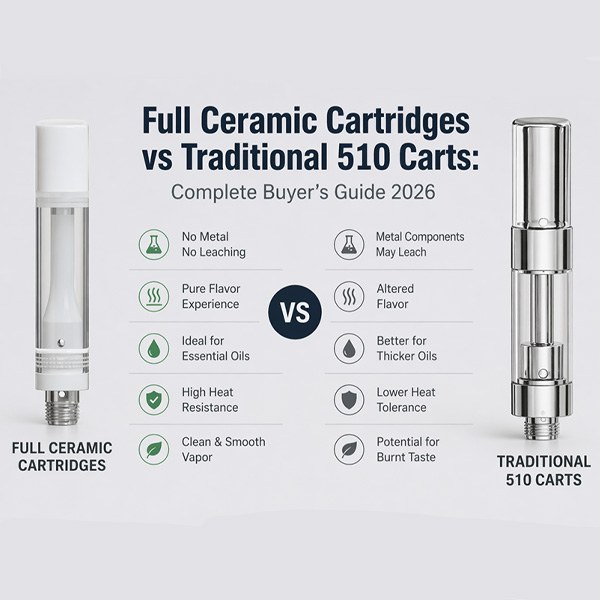
A 510 connection describes the interface between components, not whether the cartridge can be opened or refilled. Mechanical fit also does not establish complete electrical or operating compatibility.
For additional context on these specifications, see the 510 thread battery guide.
Clear documentation should state which component is rechargeable, which component is replaceable, and whether any component is refillable.
A Documentation Checklist for CBD Hardware
Before describing a device as rechargeable, refillable, or reusable, check that the current documentation answers the following:
- Charging: What interface, input requirements, and instructions apply?
- Filling: Is the reservoir intended for initial manufacturer filling, repeated user filling, or neither?
- Replacement: Can a cartridge, pod, heating element, or battery be replaced?
- Compatibility: Which replacement components are supported?
- Service life: What conditions indicate that a component should no longer be used?
- End-of-life handling: What disposal or collection instructions apply?
Keep the model and version consistent across the specification sheet, packaging, and instructions. If the design changes, review whether the terminology remains accurate.
DANK SMOKE’s CBD vape hardware quality control guide explains how specifications, test evidence, and production records can be connected to an identifiable product configuration.
Rechargeable Does Not Mean Suitable for Household Recycling
A rechargeable device still requires appropriate handling at the end of its life.
The U.S. Environmental Protection Agency advises that lithium-ion batteries and products containing them should not be placed in household trash or municipal recycling bins. Its used lithium-ion battery guidance explains collection and recycling options.
For an intact vape device, ask the local waste authority which collection program accepts the complete product, including any remaining contents. Do not assume that a general battery collection point accepts every type of device.
Product instructions should address the complete item rather than imply that a charging port makes it recyclable through ordinary household collection.
Häufig gestellte Fragen
Are rechargeable and refillable vapes the same?
No. Rechargeable refers to restoring battery power. Refillable refers to adding liquid to a reservoir designed for repeated filling. The two features must be confirmed separately.
Can every rechargeable vape be refilled?
No. A rechargeable device may have a sealed reservoir. Only describe it as refillable when the manufacturer’s instructions explicitly support repeated filling.
Does USB-C guarantee a shorter charging time?
No. Charging time depends on the device’s charging system, battery, supported input, and operating conditions. The connector alone does not establish charging speed.
Is an empty cartridge always refillable?
No. An empty cartridge may be intended for one initial filling and closure during manufacturing. That does not automatically make it suitable for repeated user refilling.
What should a clear product description say?
It should identify charging capability, filling restrictions, replaceable components, compatibility requirements, and end-of-life handling separately. Each statement should match the documented design of the exact model.